An insurance adjuster’s “sympathy” call isn’t an act of kindness. It’s a tactical maneuver designed to silence your claim before you even realize what it’s actually worth. You’re currently buried under the weight of a loss that never should’ve happened. The grief is crushing. The sudden financial pressure feels like a second assault. You want justice; however, the legal system often feels like a maze built to protect the negligent. We understand that you’re not just looking for a settlement. You’re looking for a way to fight back.
This guide serves as your shield and your roadmap. We’ve simplified the complex
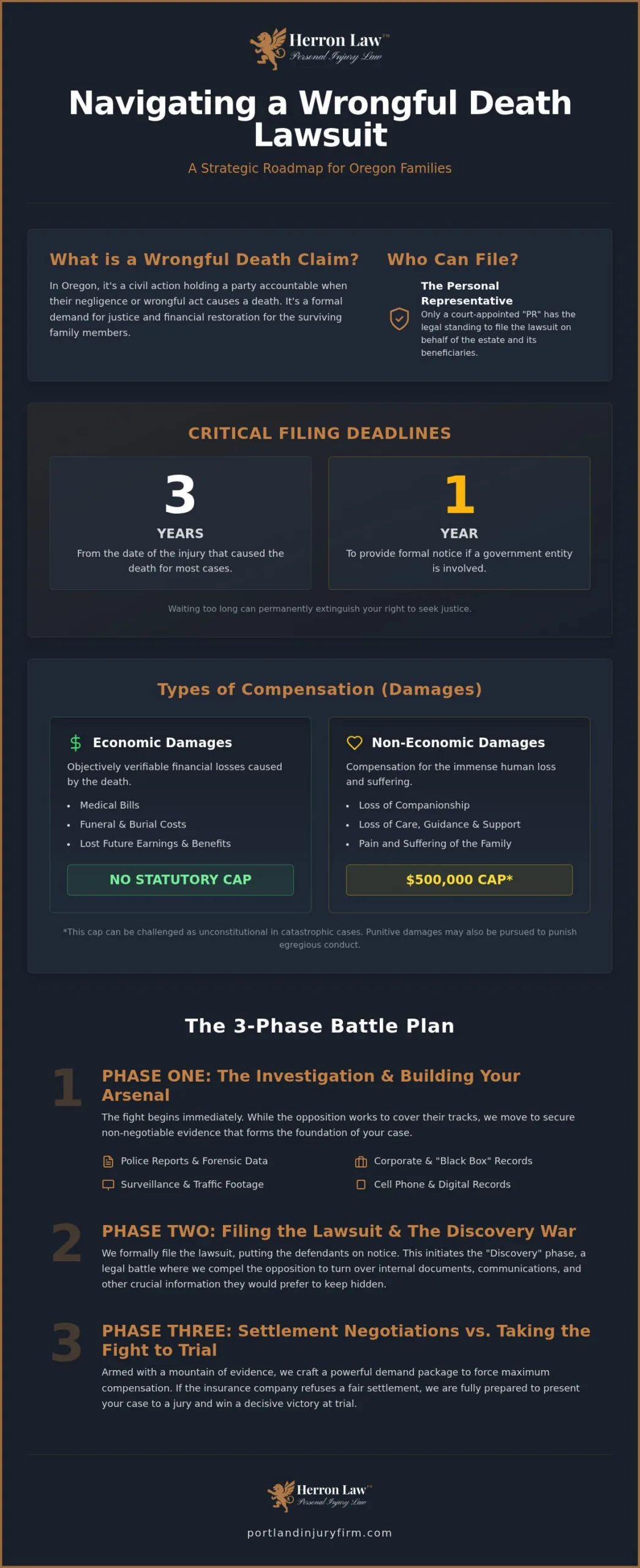
wrongful death lawsuit process so you can stop reacting and start taking ground. You deserve to know how to navigate the three-year statute of limitations and when to challenge the $500,000 non-economic damages cap. We’ll walk you through opening a probate estate, gathering evidence, and preparing for a high-stakes tactical battle. By the end of this article, you’ll have a clear, step-by-step plan to hold the responsible parties accountable and secure the financial restoration your family needs to survive.
Key Takeaways
- Identify who has the legal standing to lead the charge and why the court must appoint a Personal Representative to act for the estate.
- Master the high-stakes wrongful death lawsuit process to anticipate insurance company tactics and counter their attempts to shift blame.
- Secure the legal battlefield immediately by gathering non-negotiable evidence and deploying expert witnesses to reconstruct the truth.
- Learn how to craft a powerful demand package that forces maximum compensation or prepares your case for a decisive victory at trial.
- Position your family behind a shield of 27 years of combat experience to ensure you’re never treated as just another case number.
What Is a Wrongful Death Claim and Who Can File in Oregon?
A
Wrongful Death Claim isn’t just a legal filing. It’s a formal demand for accountability. In Oregon, this civil action arises when a life is taken due to another party’s negligence or “wrongful act or omission.” Whether it was a reckless trucker or a distracted driver, the law provides a path to recovery. But the clock is ticking. You generally have three years from the date of the injury that caused the death to file your lawsuit. Wait too long, and your right to fight vanishes forever. If a government entity is involved, the timeline is even more aggressive. You have just one year to provide formal notice under the Oregon Tort Claims Act.
The Role of the Personal Representative
Most families think the next of kin simply signs a paper to start the
wrongful death lawsuit process. They’re wrong. Oregon law requires the court to appoint a “Personal Representative” (PR) to lead the estate. This individual is the only one with the legal standing to file the suit. If your loved one left a will, it likely names this person. If no will exists, the court selects someone, typically a spouse or adult child. This isn’t a ceremonial title. The PR has a strict legal duty to act in the best interest of all beneficiaries, not just themselves. We handle the heavy lifting of this appointment because insurance companies exploit any delay in this process to devalue your claim. Speed is your best weapon in this tactical battle.
Identifying the Beneficiaries and Damages
Oregon law identifies specific survivors entitled to compensation, including spouses, children, and parents. We use our 27 years of experience to build an arsenal of evidence that maximizes the value of your recovery. Our focus is on two distinct categories of damages:
- Economic Damages: These are objectively verifiable losses. We demand payment for medical bills, funeral costs, and the total value of future earnings your loved one would’ve provided. There’s no cap on these amounts.
- Non-Economic Damages: This covers the loss of companionship, guidance, and emotional support. While Oregon statutes attempt to cap these at $500,000, we don’t accept that as the final word.
Recent 2026 legal trends, such as the ruling in
Estate of Fisher v. Lee, show that these caps can be challenged as unconstitutional in cases of catastrophic loss. We don’t just ask for the limit. We fight to exceed it when the facts of the case demand it. If the defendant’s conduct was particularly egregious, we may also pursue punitive damages to punish the wrongdoer and prevent future tragedies. You can explore our
practice areas to see how we’ve handled these high-stakes battles for other families.
Phase 1: The Investigation and Building Your Arsenal
The
wrongful death lawsuit process starts with a high-stakes investigation. While your family is focused on healing, the negligent party’s insurance company is already working to erase their tracks. We don’t let them. We treat the initial phase of the case as a tactical window to secure evidence that will eventually force a maximum settlement or win a jury trial. This isn’t just about filing paperwork; it’s about building an undeniable arsenal of facts that makes the defense’s position impossible to maintain.
Gathering Hard Evidence for Fatal Accidents
Evidence is perishable. Skid marks fade. Digital logs can be “lost.” We move immediately to lock in the critical data points that prove liability before they disappear. Our team handles the heavy lifting of securing the following:
- Police reports and forensic data from the crash site.
- Surveillance footage from nearby businesses or traffic cameras.
- Cell phone records to prove distracted driving.
- Corporate records and “black box” data in commercial truck cases.
Negligence in a fatal car wreck is the failure to exercise the reasonable care that a prudent person would have used under similar circumstances, directly leading to a loss of life. By securing witness statements before insurance adjusters can interfere, we preserve the truth. If you need a
professional review of the evidence in your case, we are here to provide clarity.
The Power of Expert Testimony
Prevailing in a
wrongful death action requires proving the total value of a stolen life. We don’t guess. We employ elite economists to project the lifetime value of a lost salary, including future raises and benefits. We also use vocational experts to calculate the loss of household services and parental guidance. These experts turn abstract grief into concrete, recoverable damages that a jury can understand.
Our 27 years of experience means we have the resources to hire the best reconstructionists and medical examiners in the field. Partnering with a
Wrongful Death Attorney: Fighting for Justice ensures that your claim is backed by high-level science and financial data. We handle these costs upfront so you can focus on your family while we focus on the fight. We only get paid when we win, meaning our interests are perfectly aligned with your family’s recovery.
Phase 2: Filing the Lawsuit and the Discovery War
Filing the formal Complaint is the first strike in the
wrongful death lawsuit process. This document isn’t just a summary of the accident; it’s a precise legal weapon that identifies the negligent parties and demands specific damages under
Oregon Revised Statute 30.020. Once served, the defendant must provide “The Answer.” Don’t expect an admission of guilt. Insurance companies almost always use this response to deny responsibility or attempt to shift the blame onto your loved one. This is where the politeness ends and the combat begins.
Following the initial filings, we enter the Discovery phase. This is a rigorous exchange of information where we force the opposition to show their hand. We use Interrogatories; these are written questions the defendant must answer under penalty of perjury to lock them into a specific story. We also demand every relevant document, from internal emails to hidden safety audits. If there is a smoking gun, we will find it. If they try to hide it, we will fight to expose it. This phase is a war of attrition, and we are prepared to outlast them.
The Tactical Importance of Discovery
Discovery is often where we win the case. We don’t just look at the obvious facts; we dig deeper to uncover layers of corporate liability and hidden insurance policies that the defense would rather keep secret. Depositions are our most effective tool for extraction. During these face-to-face sessions, we question the defendant and their witnesses under oath. We look for contradictions. We pounce on inconsistencies. This requires a warrior persona. You need an advocate who isn’t afraid to be aggressive when the truth is being suppressed. We don’t settle for “I don’t recall” when the evidence says otherwise.
Motions and Procedural Battles
The defense will try to end your case before it ever reaches a jury. They often file motions to dismiss or requests for summary judgment, hoping a judge will throw out the claim on a technicality. We act as your tactical shield during these procedural skirmishes. We draft ironclad responses that protect your rights and ensure the evidence exchange remains fair. The judge oversees this process, but our job is to ensure they see the full scope of the defendant’s negligence. Having a
Personal Injury Lawyer: Your Tactical Shield means you have an elite partner who knows how to navigate these high-stakes maneuvers without flinching.
Phase 3: Settlement Negotiations vs. Taking the Fight to Trial
Insurance companies expect you to be desperate. They’re counting on your grief to cloud your judgment. That’s why their first offer is almost always an insult. In the
wrongful death lawsuit process, this is the moment where many families falter. They accept a quick payout that barely covers the funeral, leaving surviving dependents with a lifetime of financial anxiety. We don’t let that happen. We counter their low-ball tactics with a comprehensive Demand Package. This is a massive document detailing every dollar of economic loss and every ounce of emotional suffering your family has endured.
If negotiations stall, we move to mediation. A neutral third party tries to broker a deal; however, we don’t treat mediation as a compromise. We treat it as a final opportunity for the defense to pay what they owe before we take the fight to a jury. Our trial readiness is your strongest leverage. When an insurance giant knows we have handled over 2,000 cases and aren’t afraid of a courtroom, they finally start talking real numbers. Our approach to the
wrongful death lawsuit process is built on the threat of total accountability.
Evaluating a Settlement Offer
A fair settlement must do more than pay today’s bills. It has to secure your family’s future. Does the offer account for twenty years of lost income? Does it provide for your children’s education? We also have to factor in “liens” from medical providers or health insurance companies that will want their cut of the recovery. We calculate the net value, which is the actual amount that goes into your pocket, before recommending any move. If the number doesn’t represent total justice, we tell you to say “no” and we prepare to walk into the courtroom. You can see how we evaluate these high-stakes claims in our
practice areas.
The Trial: Demanding Justice Before a Jury
If the defense refuses to be reasonable, we let a jury of your peers decide. This is where we present the “human story” of your loss. We don’t just talk about statutes; we talk about the empty chair at the dinner table. Our opening statements are designed to command the room and expose the defendant’s recklessness. A jury calculates the value of justice based on the evidence we’ve meticulously gathered. It’s the ultimate form of accountability. We are ready to be your shield against insurance giants.
Contact us now to start the fight for your family.
Why Herron Law Is Your Essential Shield in the Wrongful Death Battle
You’re facing a multi-billion dollar insurance machine. They have unlimited resources; however, they don’t have our resolve. Herron Law operates as your essential shield and sword in this high-stakes environment. We bring 27 years of combat experience to your corner. We’ve gone toe-to-toe with major carriers and emerged victorious. Our firm specializes in navigating the
wrongful death lawsuit process for families who refuse to be silenced. We know the local landscape. Whether your case is in Multnomah, Washington, or Clackamas county, we understand the specific court dynamics that influence your outcome. You aren’t just another file to us. You’re a priority.
No Upfront Costs, No Risk
Financial barriers shouldn’t stop you from pursuing the truth. We provide a contingency shield that protects your family from the crushing costs of litigation. Our “No Win, No Fee” promise means we take on all the risk. We fund the deep-dive investigations ourselves. We pay for the expert witnesses and the accident reconstructionists required to prove liability. You focus on healing; we’ll focus on the recovery. If we don’t secure a settlement or verdict, you don’t pay us a cent for our legal services. It’s that simple. We are an elite partner that is deeply personal yet externally aggressive.
Demand Justice Now – Contact Us for a Free Consultation
A History of Maximum Recovery
Success in the
wrongful death lawsuit process isn’t accidental. It’s the result of a “total focus” strategy where your family is the singular focus of our efforts. We have recovered millions for our clients because we don’t accept low-ball settlements. Bart Herron’s reputation as a high-stakes fighter precedes him. Insurance adjusters know that when Herron Law is on the case, a quick, cheap exit is off the table. They know we’ve handled over 2,000 cases and have the results to prove it. When you hire a
Car Accident Death Lawyer: Demanding Justice, you’re hiring 27 years of tactical expertise. We don’t just ask for fairness. We demand it. We don’t just pursue results. We seize them. Your family deserves a shield that never breaks and a sword that never dulls.
Seize Justice for Your Family
You’ve seen the map of the legal battlefield. The
wrongful death lawsuit process is designed to be a war of attrition; however, you don’t have to fight it alone. From appointing a Personal Representative to exposing contradictions in depositions, every tactical step we’ve covered is a move toward total accountability. We’ve shown you why immediate investigation matters and why the insurance company’s first offer is always a trap. Now, it’s time to act. The insurance giants are counting on you to stay quiet. They want you to accept an insulting settlement and disappear. Don’t give them that satisfaction. You have the right to demand more.
Herron Law brings 27+ years of litigation experience to your corner. We have recovered millions for grieving families by refusing to flinch in the face of corporate opposition. Our contingency fee shield ensures you pay nothing unless we win. We take the financial risk. We fund the experts. You focus on healing while we focus on the fight. Justice isn’t a gift; it’s a result of relentless pressure.
Secure Your Family’s Future: Contact Herron Law Today. We are ready to stand with you and win.
Frequently Asked Questions
How long does the wrongful death lawsuit process typically take in Oregon?
The
wrongful death lawsuit process in Oregon typically takes between 18 and 36 months to resolve. While a simple claim might settle earlier, complex litigation involving commercial carriers or multiple negligent parties requires a longer tactical window. We don’t rush the process if it means leaving your family’s money on the table. We take the time necessary to build an undeniable arsenal of evidence that forces the defense to pay.
Can siblings or grandparents sue for wrongful death in Portland?
Siblings and grandparents generally don’t have the primary right to sue in Oregon unless they’re named as beneficiaries or were legal dependents. The law prioritizes the surviving spouse, children, and parents of the deceased. If these primary relatives don’t exist, the estate’s personal representative may seek damages for other heirs. We examine your specific family structure to ensure every rightful claimant is protected from insurance company exclusion tactics.
What happens if the negligent party is also facing criminal charges?
A civil lawsuit proceeds independently of any criminal charges the defendant may face. You don’t have to wait for a criminal conviction to demand justice. The “preponderance of evidence” standard in a civil claim is lower than the “beyond a reasonable doubt” standard used in criminal court. This means we can often win a settlement even if the defendant escapes jail. We use the criminal investigation as a tactical advantage.
Is a wrongful death settlement taxable under federal or state law?
Compensatory damages for physical injury or sickness are generally non-taxable under federal and Oregon law. This includes payments for medical bills, funeral costs, and the loss of financial support. However, any portion of the settlement classified as punitive damages or interest may be subject to taxes. We work to structure settlements in a way that maximizes the amount your family keeps. You should always consult a tax professional for your specific 2026 filing.
How much is an average wrongful death settlement worth in 2026?
There’s no such thing as an “average” settlement because every stolen life has a unique value. Factors like the deceased’s future earning capacity and the severity of the defendant’s negligence dictate the final number. In 2026, we’re seeing higher recoveries due to successful challenges to the $500,000 non-economic damages cap in cases of catastrophic loss. We don’t settle for averages; we demand the maximum value the law allows for your loss.
What if the deceased person was partially at fault for the accident?
Oregon follows a modified comparative negligence rule that allows you to recover damages as long as your loved one wasn’t more than 50% at fault. If they were 20% responsible, your total recovery is simply reduced by 20%. Insurance adjusters will fight to inflate this percentage to save their bottom line. We act as your shield, using forensic evidence to push back and prove the defendant’s primary liability in the accident.
Can I file a wrongful death claim if the person died months after the accident?
Yes, you can file a claim as long as the original injury caused the eventual death. The critical factor is the medical link between the accident and the passing. The statute of limitations generally runs three years from the date of the injury that led to the death. We deploy medical experts to bridge the gap between the initial trauma and the loss, ensuring the negligent party remains accountable for the full consequences.
How is the settlement money divided among family members?
The Personal Representative manages the distribution of funds under the oversight of the probate court. Oregon law requires a fair division among the surviving spouse, children, and parents based on their individual losses. If the family can’t agree on a split, the court will hold a hearing to decide the final distribution. We guide the representative through this process to ensure the division is transparent, legal, and honors your loved one’s legacy.